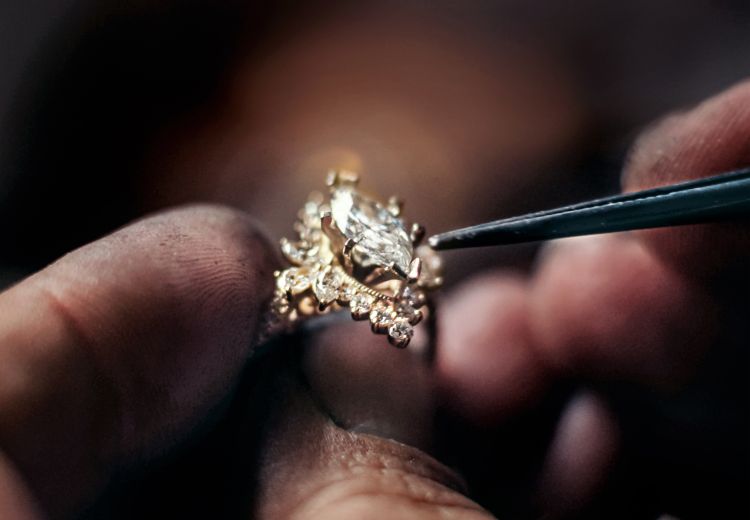
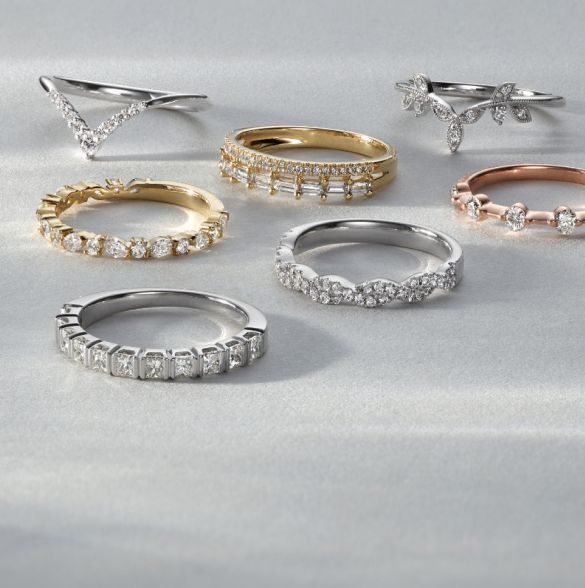
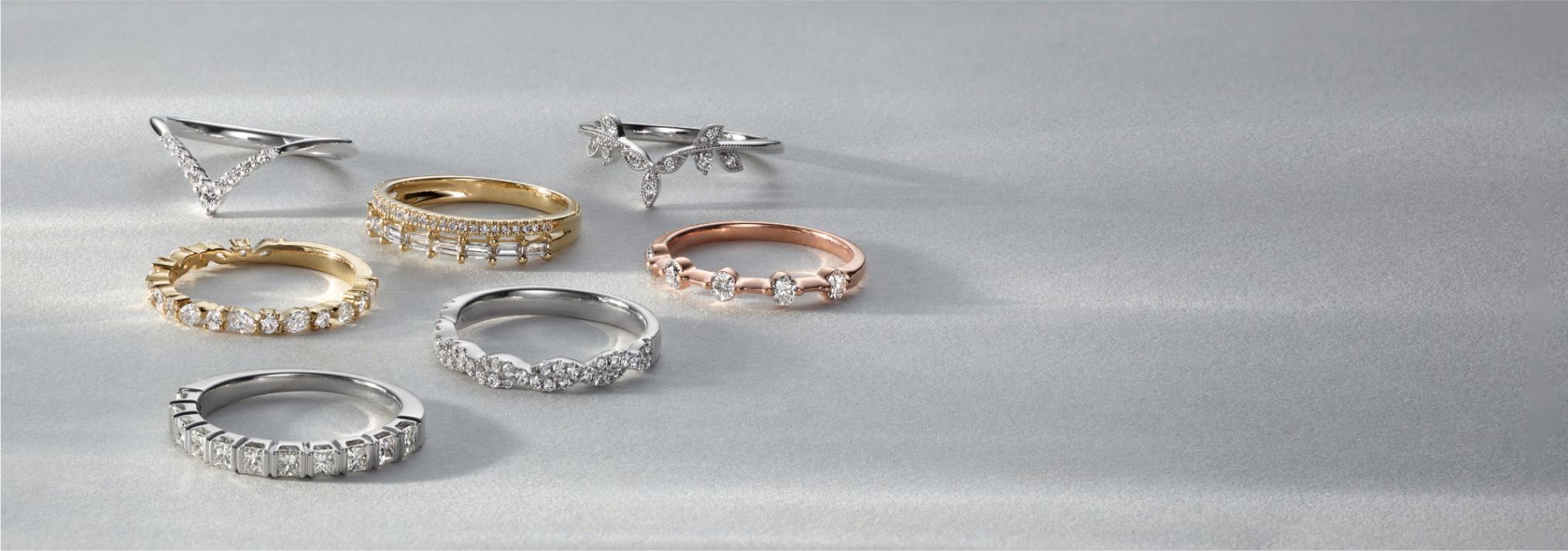
As an engagement and wedding ring buyer for Shane Co., my job is to make dreams come true.  Most little girls dream about their wedding day and what their wedding rings will look like.  I travel extensively researching trends and listening to brides so that I can develop that special engagement ring that will make her dream come true.

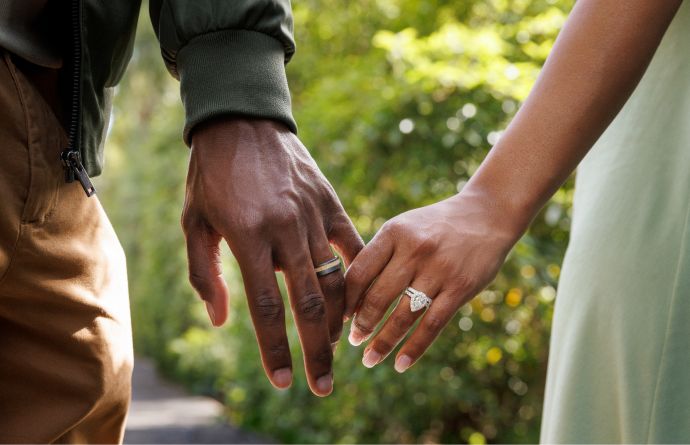
Diamond engagement rings are one of the most special and important purchases brides-to-be will make in their lives. The ring a woman chooses will be worn on that all-important finger for the rest of her life.  Often this same engagement ring will become a family heirloom and passed down from generation to generation.  It is a symbol of lifelong commitment between two people who have chosen to spend their lives together.  Finding the perfect ring that will pass the test of time is imperative.

Trends are always changing, even in jewelry.  What was popular yesterday may not be popular tomorrow.  Styles come and go and come back again.  There are classic designs that will always appeal to many women, and there are more unique and trendy looks that are preferred by women with specialized tastes and preferences, like vintage designs. Both types of styles, classic and modern, can always be tweaked and updated to be something new.  As a jewelry buyer, my job is anticipating what today’s bride will want to wear on her ring finger for the rest of her life.  Only by keeping my eyes and ears open in jewelry markets and listening to this customer is it possible to anticipate what she will want for her engagement ring and to design styles she will love accordingly.

Inspiration for new designs can come from anywhere.  I am always looking to see what today’s brides are wearing on their fingers.   What details of her ring stand out to me?  Could I make something new and fresh from some element of her ring?  I spend a lot of time in our Shane Co. stores, including our San Francisco jewelry stores, listening to our customers.  It is not unusual for me to catch a great tip from a bride and immediately go to work sketching and making notes to send on to a designer.  Perhaps I have something similar already, but I could make it more beautiful by adding a few design touches.  There are days where I have been inspired by what I heard from a customer, found a quiet corner to sketch, and have sent an idea off to a designer overseas who may be sleeping at the time.  By the end of the evening, the designer was as inspired as I was and I may already have computer generated images of what I had imagined for a new design.  It is an exhilarating experience to see the vision in my head come to life once the designer has worked his magic and made my new favorite engagement ring a reality.  It is equally as exciting to go back to the stores and witness the joy in our customers’ eyes when they discover an exclusive design that is exactly what they were hoping to find.  

You can see all of the amazing possibilities waiting for you when you visit ShaneCo.com.

Diamonds, with their mesmerizing bursts of light and unparalleled beauty, have captured the human imagination for centuries. Yet the cut and polished diamonds you see, for example, in engagement rings, bear little resemblance to their original form.

Diamond, the hardest known substance, is made entirely of carbon. Diamonds form over billions of years and as much as 120 miles below the Earth’s surface, where unfathomable temperature and pressure rearrange carbon atoms into a crystalline structure. Volcanic eruptions then act as an elevator, lifting the diamond-bearing material closer to the Earth’s surface. Some of the material gets washed down ancient riverbeds.

Denver Diamonds
Turning rough diamonds into “Wow!” diamonds

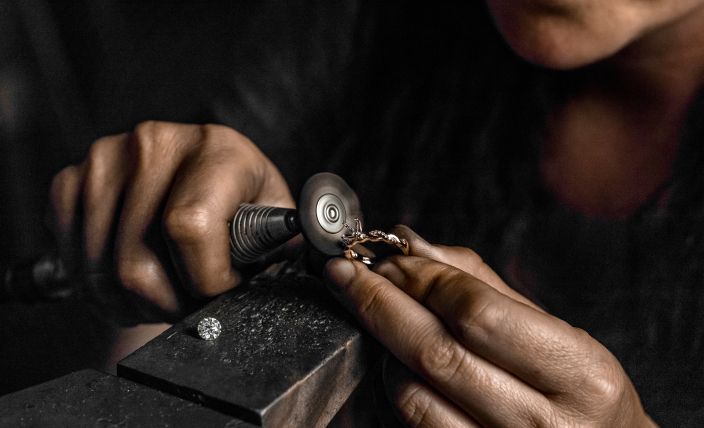
When mined from the earth or the ancient riverbeds, rough diamonds look like pieces of ordinary molten glass. The raw material holds remarkable, natural optical qualities. But it takes highly specialized skill, scientific knowledge, and tools to turn rough diamonds into the sought-after, scintillating gemstones that are universally treasured. It wasn’t until the mid-1700s that man’s understanding of the science of optics and the art of diamond cutting converged. In 1919, master gem cutter and mathematician Marcel Tolkowsky established the 58-facet standard and today’s most widely accepted proportions for an ideal cut round diamond.

By the way, if you are in the market for an engagement ring, take some advice from someone who has been buying diamonds from the cutters in Antwerp, Tel Aviv and Mumbai for 25 years. Buy a 58-facet diamond and you will have a diamond which will be more valuable over time, worldwide. A diamond that has been deliberately cut with an odd number of facets – which is a marketing gimmick used by some jewelers – will prove to be very difficult to trade in or resell in the future.

Why do diamonds sparkle?

A diamond’s sparkle is caused by light reflecting or sparkling off of the crown facets of the diamond – the table, upper girdle, bezel and star facets. These flickers or flashes of light are called scintillation. Fire describes the diamond’s ability to disperse the different colors of the light spectrum, while brilliance describes the diamond’s return of white light to the eye. The more light a diamond reflects back to your eye, the more scintillation, dispersion and brilliance it has.

The cut of a diamond determines how much scintillation, dispersion and brilliance is present. A diamond cut too deeply will allow light to escape out of the side of the diamond. A diamond cut too shallow will allow light to escape out of the bottom of the diamond. Other major or minor symmetry issues may also result in an optically inefficient diamond.

Whatever your definition of affordable engagement rings is, knowing how to evaluate diamonds will help ensure you get the finest quality diamond for your money.

Learn more about the relationship between cut and sparkle at ShaneCo.com.

I’m going to give you some helpful tips when you’re shopping for diamonds at jewelry stores. But first allow me to introduce myself. My name is Edward, and I oversee all loose diamond purchases for Shane Co., direct diamond importers. I earned my Graduate Gemologist certification from the Gemological Institute of America’s “in residence” laboratories. I have been a loose diamond buying specialist for over 25 years. After years of traveling extensively to the diamond manufacturing centers of Antwerp, Belgium, Tel Aviv, Israel and Mumbai, India, I have acquired the market knowledge necessary to deliver a quality product. Additionally, I have lived overseas for Shane Co. for 18 months.

 Atlanta Rings

Every advantage Shane Co. has is a result of decades and generations of relationship building with the world’s elite specialty diamond manufacturers. Buying this far up the supply chain gives us the buying privilege of the finest goods. I like to say, “from the hand of the maker to the hand of our customer.” The same advantages we have worked so hard to create in the world’s diamond markets translate into a buying advantage for our customers.

When I buy our diamonds I buy with the eye of our customer, knowing the diamonds we select will become part of diamond engagement rings, wedding rings, and other jewelry that symbolizes the most important of life’s events and relationships. I bear down and pick the brightest diamonds with the most agreeable clarity characteristics. I select from thousands of diamonds and reject a relatively high percentage of them. I like to say we get the rib eye, the others get the leftovers, with apologies to my vegetarian friends.

Diamond Buying Tips from an Expert

Here are a few tips from someone with more than one pair of worn out diamond tweezers. (Diamonds are the hardest of substances. They will wear down the metal in diamond tweezers.)  When buying diamonds, it is important to shop where you find the broadest and deepest selection. These are the serious companies of which there are very, very few.

From the Atlanta jewelry stores to the Seattle jewelry stores,  or jewelry stores wherever you happen to shop, examine the diamonds loose. You have more control when you can see the most important diamond of your engagement ring or wedding set while it is clean and loose. It is much easier to compare diamond to diamond. When the center diamond is already mounted it is more difficult to make the most informed buying decision. Examine the diamond with a diamond loupe to better understand what you are buying.

Although important, do not get caught up in all the letters and numbers of diamond grading and don’t let that be your only guide for your purchase. Look into the soul of the diamond. How bright and sparkly does it look? Does it look like its size, as some diamonds are cut with intentionally shorter diameters? Consequently, a 1.00 carat looks like a .90 carat. Compare diamonds side by side as no two diamonds look alike.  Two diamonds can have the same carat weight, color and clarity and look very different.

Buy with your eyes not with your ears. Don’t buy from a commissioned salesperson. Do not succumb to pressure; you are in charge.

At Shane Co. you have the buying advantage of selecting one of thousands of loose diamonds and one of a thousand finely tailored rings to create a wholly unique engagement and wedding set for the one you love.

The Shane Co. website has an outstanding Jewelry Education section that will tell you everything you need to know to make a confident and informed diamond purchase. Click on www.ShaneCo.com to go there now.

Blog WebMastered by All in One Webmaster.